
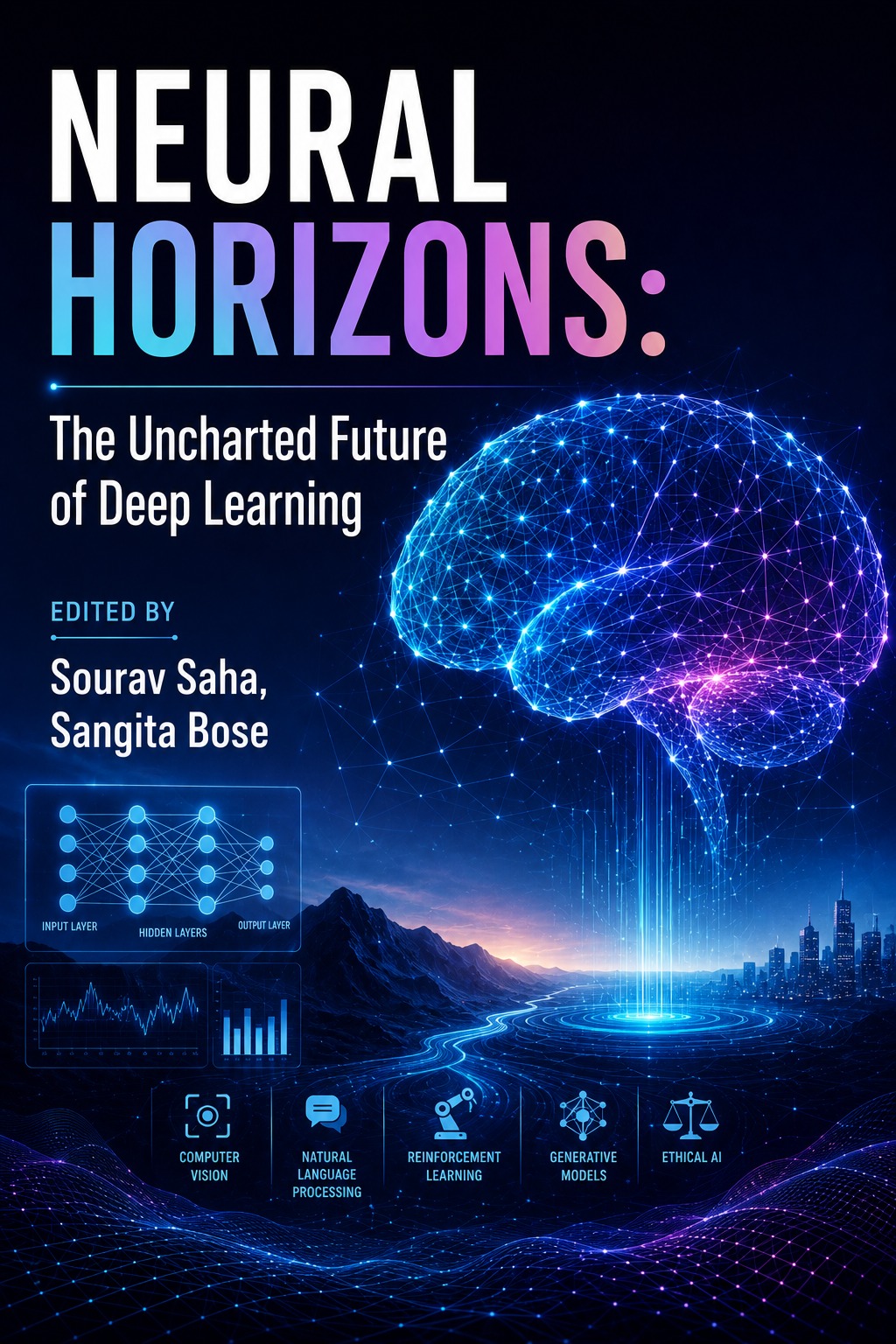
Published 2026-05-27
How to Cite
Copyright (c) 2026 Swami Vivekananda University Press

This work is licensed under a Creative Commons Attribution-NonCommercial 4.0 International License.
Abstract
Recent advancements in large-scale pre-trained language models, particularly those based on transformer architectures, have demonstrated impressive performance across a wide variety of natural language processing (NLP) tasks. One of the most significant and surprising capabilities these models exhibit is their ability to perform few-shot learning, where they can generalize and solve new tasks with only a few examples. This ability contrasts with traditional supervised learning, which generally requires large amounts of labeled data. In this paper, we investigate the few-shot learning abilities of language models, exploring how these models achieve such performance, the tasks for which they are most effective, and the underlying mechanisms that enable this behavior. Through empirical experiments, we demonstrate the strengths and limitations of few-shot learning in transformer-based models like GPT-3, and discuss the implications for the future of machine learning and natural language understanding.
DOI - https://doi.org/10.65525/SVUP.9788199778009.2026.224-230