
Published 2026-05-06
Keywords
- Media,
- Headlines,
- Public Opinion,
- Justice,
- Viral News
- Misinformation,
- Media Ethics,
- Digital Media,
- Social Impact,
- Due Process ...More
How to Cite
Copyright (c) 2025 Swami Vivekananda University Press

This work is licensed under a Creative Commons Attribution-NonCommercial 4.0 International License.
Abstract
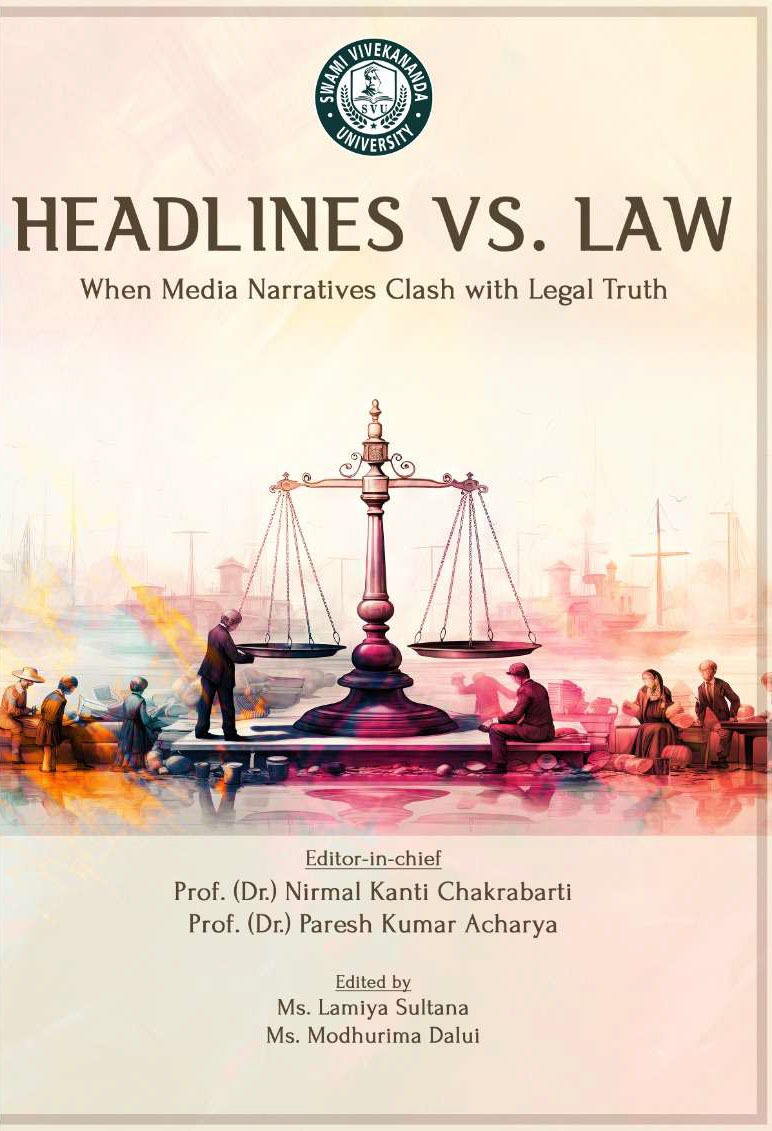
In today's media landscape, judgment rarely waits for the facts. This chapter, titled "The Headline Becomes the Verdict," explores how news headlines, push notifications, and viral summaries influence public opinion before evidence is examined or context is understood. What once served as the beginning of a story now often becomes its conclusion, shaping beliefs within seconds and leaving little room for doubt. This chapter highlights how speed, competition, and audience attention have transformed the role of headlines—from gateways to information to powerful narrative weapons. It examines how framing, repetition, and emotive language subtly manipulate perception, turning allegations into assumptions and suspicion into confirmed belief. The public often makes up its mind long before courts, investigations, or inquiries reach any conclusion. Beyond the mechanics of media operations, this chapter focuses on the impact. Reputations are reshaped, trust erodes, and the consequences linger even when the facts change. Retractions fail to erase initial impressions, and silence after exoneration rarely carries the same weight as the initial accusation. The damage isn't always legal, but it is deeply personal and lasting. Rather than simply arguing for censorship or restraint, "The Headline Becomes the Verdict" challenges readers to reconsider their own roles as consumers and disseminators of information. It raises questions about our responsibilities in an age where everyone participates in the dissemination of judgment—and whether justice can survive when headlines speak louder than truth.
DOI - https://doi.org/10.65525/SVUP.9788199328655.2026.89-98