
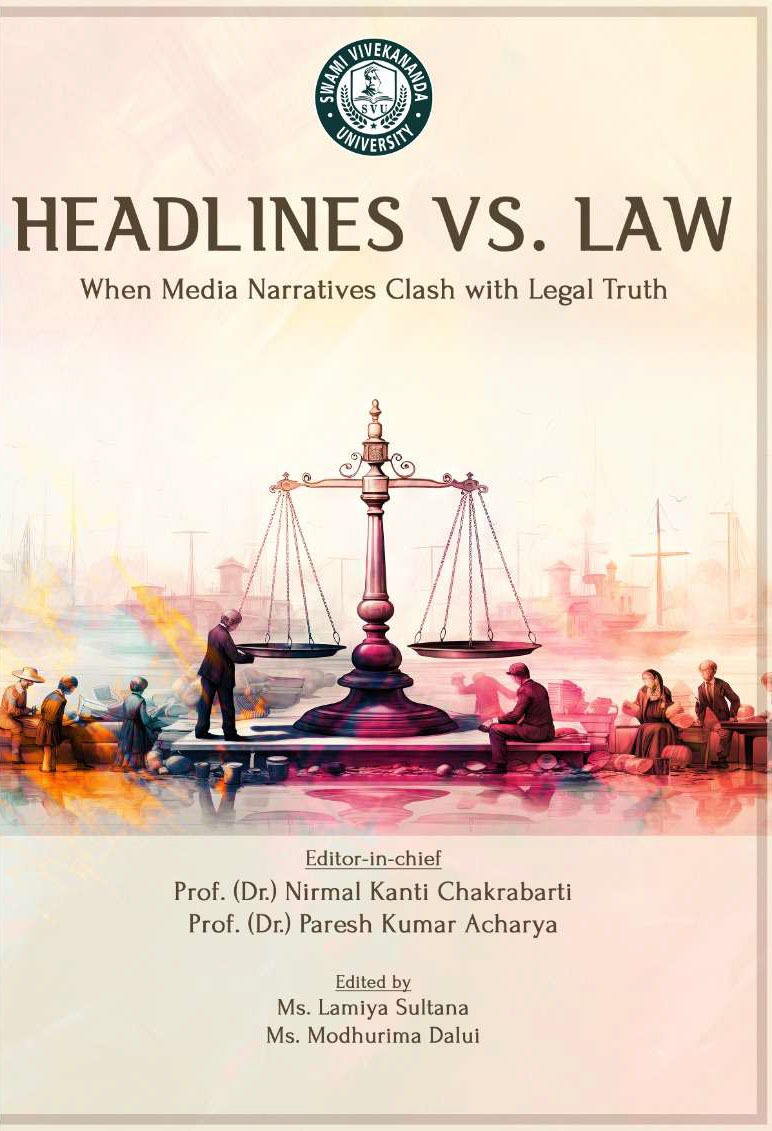
Published 2026-05-06
Keywords
- Sensationalism,
- Gender-based Crime,
- Media Framing,
- Headlines,
- Public Bias
How to Cite
Copyright (c) 2025 Swami Vivekananda University Press

This work is licensed under a Creative Commons Attribution-NonCommercial 4.0 International License.
Abstract
Gender-based crimes are rising in both visibility and severity, yet public understanding of these offences is shaped less by actual crime patterns and more by how the media frames them. Contemporary coverage particularly in mainstream outlets and digital platforms tends to amplify extreme incidents through sensational headlines, emotionally charged language, and repetitive dramatic framing. While such reporting temporarily mobilises outrage, it simultaneously obscures the systemic, everyday forms of gendered violence that statistical records consistently highlight. This disconnect creates a skewed cognitive map of gender based crime: certain victims become hyper- visible symbols of national shock, while others remain peripheral, normalised, or invisible. This study interrogates the relationship between gender, crime, and headline construction, examining how sensationalism shapes public bias, risk perception, and implicit hierarchies of victimhood. Drawing on crime data, media content analysis, and discourse patterns found in national and international reporting, the research explores how linguistic choices such as episodic framing, victim-blaming cues, moral panic triggers, and crisis-centred headlines distort societal understanding of gender-based violence. The analysis also considers how media sensationalism influences social attitudes, policy expectations, and the public’s selective empathy, reinforcing stereotypes around female vulnerability, class, morality, and “ideal victims.” By integrating insights from criminology, media psychology, and gender studies, this research identifies the structural gap between crime reality and crime representation. It argues that sensationalised headlines not only shape bias but actively participate in constructing which crimes matter, which victims are heard, and which forms of violence remain unaddressed. The findings aim to contribute to more ethical reporting frameworks and a more grounded public discourse on gender and violence.
DOI - https://doi.org/10.65525/SVUP.9788199328655.2026.47-56