
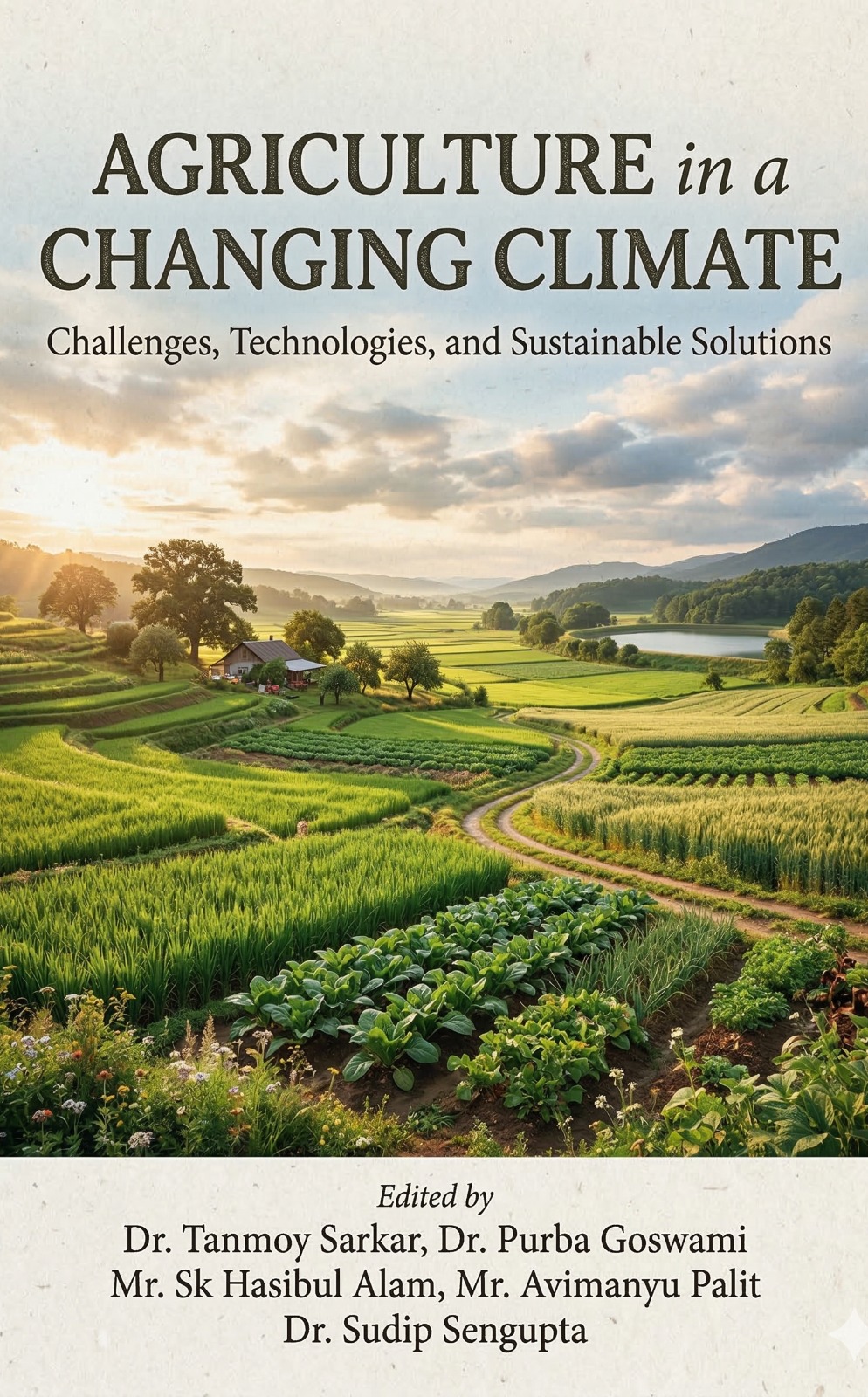
Published 2026-03-12
Keywords
- Integrated Pest Management (IPM),
- Sustainability,
- Biological Control,
- Pesticide Resistance,
- Precision Agriculture
How to Cite
Copyright (c) 2026 Swami Vivekananda University Press

This work is licensed under a Creative Commons Attribution-NonCommercial 4.0 International License.
Abstract
Integrated Pest Management (IPM) is a sustainable approach to modern agricultural challenges, addressing pest control while minimizing environmental harm. Traditional reliance on chemical pesticides has led to pesticide resistance, biodiversity loss, and health risks. IPM integrates multiple strategies-cultural, biological, mechanical, and chemical methods-to manage pests effectively while reducing pesticide dependence. Key components of IPM include crop rotation, habitat manipulation, resistant crop varieties, and biological control using natural predators. Chemical pesticides are used only as a last resort, ensuring ecological balance and long-term sustainability. IPM enhances biodiversity, improves soil health, and promotes safer food production. Despite its benefits, IPM adoption faces challenges such as limited awareness, technical expertise, and initial costs. However, advancements in precision agriculture and decision-support systems are making IPM more accessible. Governments and agricultural organizations play a vital role in promoting IPM through policies, research, and farmer education. As modern agriculture strives for sustainability, IPM offers a practical and effective solution for ensuring food security, environmental protection, and human health. Its adoption is essential for a resilient and eco-friendly agricultural future.
DOI - https://doi.org/10.65525/SVUP.9788199956070.2026.103-113